- Contact us
- |
- About us
- |
- |
-
- Dashboard
- Personal information
- Organization
- Address book
- Sign in
- Don't have an account? Sign-up
Tempest & EMSEC with Holland Shielding Systems
TEMPEST & EMSEC Shielding for Secure Information Processing
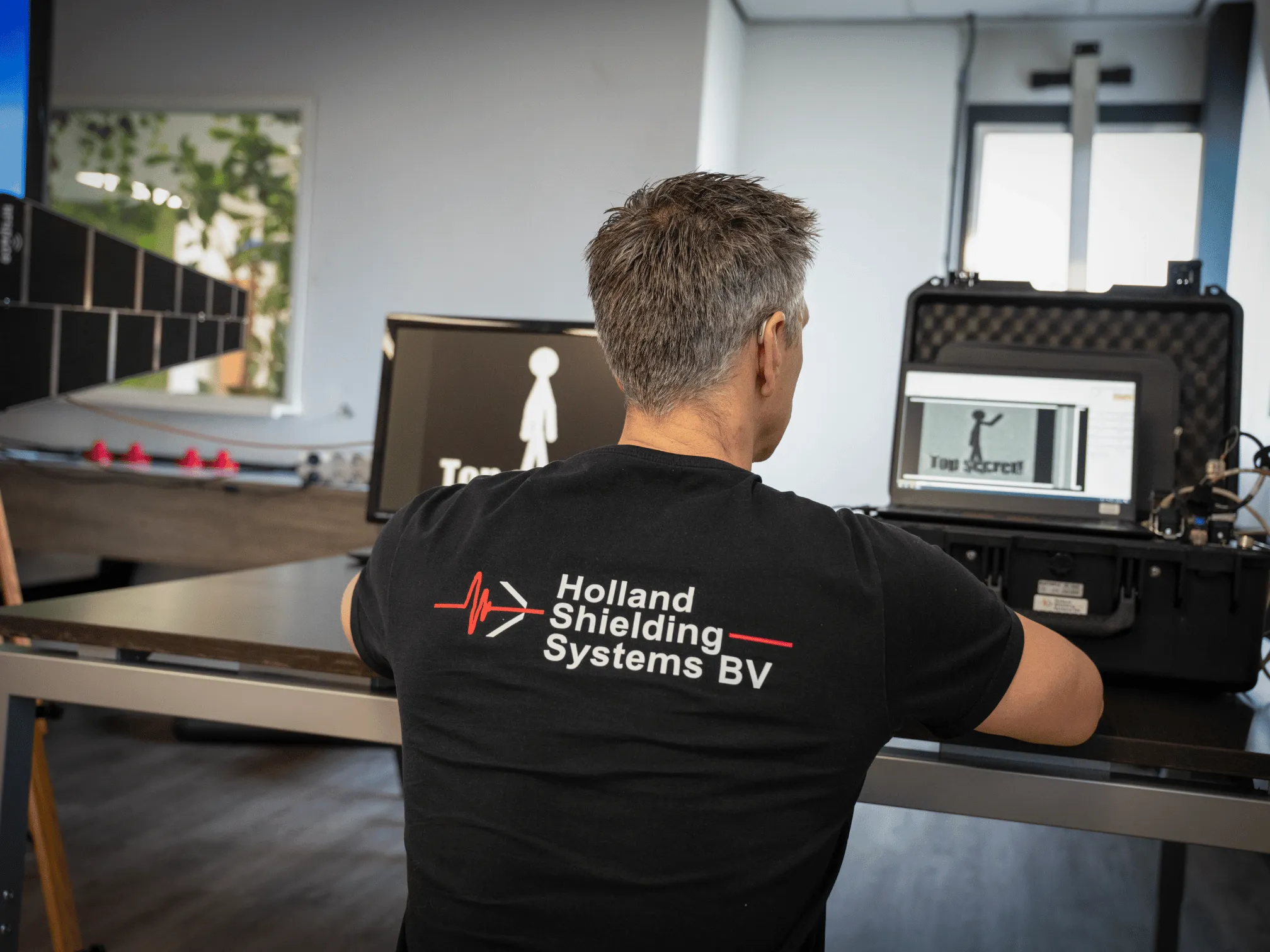
Electronic equipment can generate unintended electromagnetic emissions while processing, displaying, transmitting, or storing sensitive information. In secure environments, radiated or conducted emissions can create an information-security risk when signals can be detected outside the controlled area.
Holland Shielding Systems designs, manufactures, installs, and tests electromagnetic shielding solutions for secure rooms, equipment, power lines, data connections, and other technical interfaces.
Need Help With Your TEMPEST Project?
TEMPEST protection should consider the complete electromagnetic boundary. Holland Shielding Systems can support the engineering, manufacturing, installation, and verification of a suitable shielding solution.
- Shielded enclosure
- Filters and penetrations
- Grounding and bonding
- Installation and verification
What Is TEMPEST & EMSEC?
TEMPEST and EMSEC address the risk that sensitive information may be exposed through unintended electromagnetic emanations from electronic equipment and information-processing systems.
TEMPEST
Focuses on identifying, controlling, and testing unintended electromagnetic emanations that could reveal sensitive information.
Technical measures can include electromagnetic shielding, filtering, separation, protected penetrations, grounding, bonding, and verification.
EMSEC
Means emission security and concerns protecting information against compromise through unintended emanations.
TEMPEST is used within this broader field for the investigation, control, and testing of compromising emanations from telecommunications and information systems.
In short: EMSEC is the broader information-security discipline. TEMPEST focuses on compromising emanations and the technical measures used to identify, control, and verify them. Discover more about EMP & Tempest shielding to EMC Directive 2004/108/EC
Where TEMPEST and EMSEC Fit Into Information Security
Sensitive information can leave a controlled environment through different routes. Holland Shielding Systems focuses on the electromagnetic pathway and the physical shielding measures required around it.
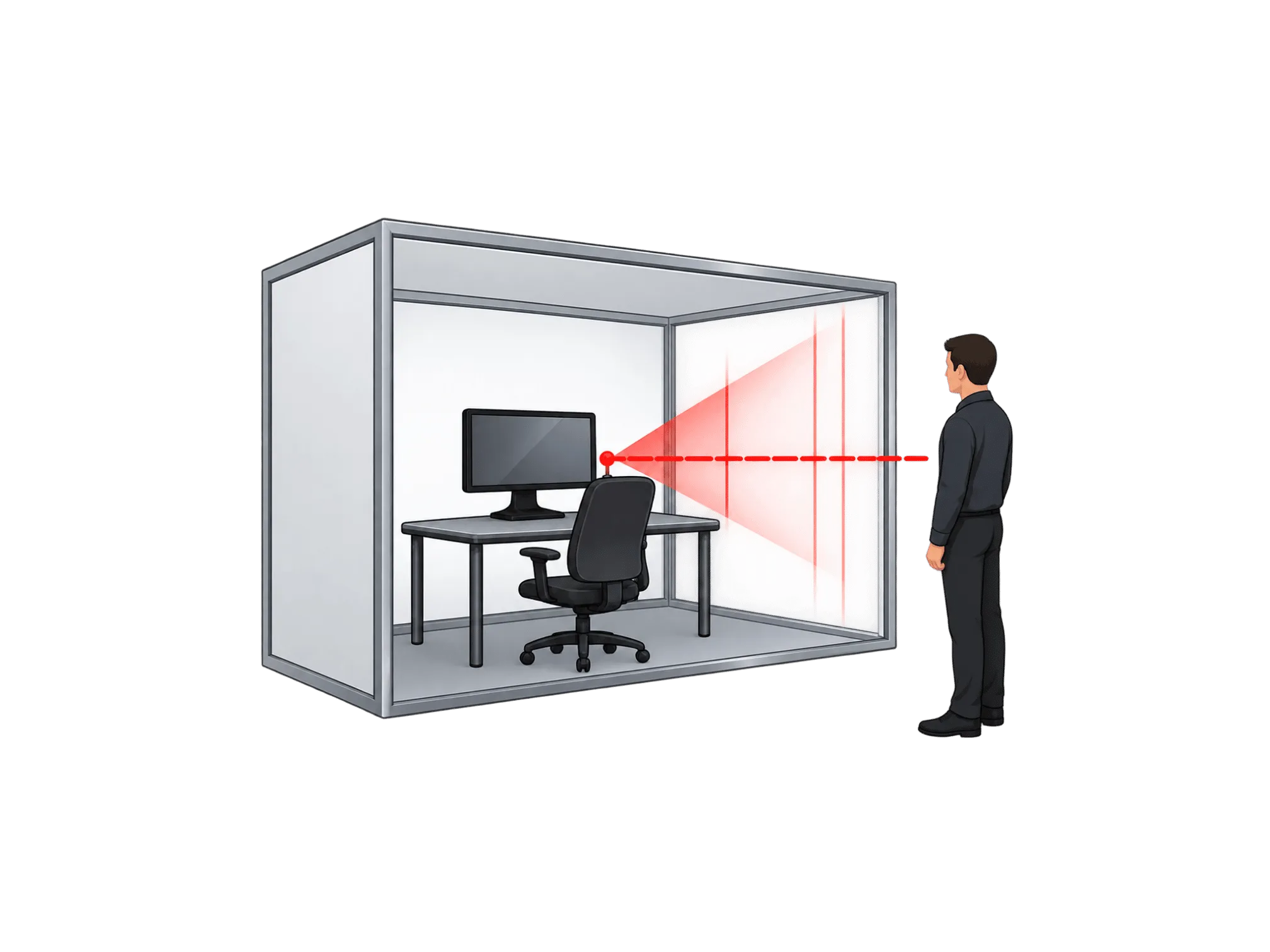
Direct Observation
Screens, documents, conversations, and workspaces may be observed directly from an uncontrolled position and are normally addressed through physical security measures.
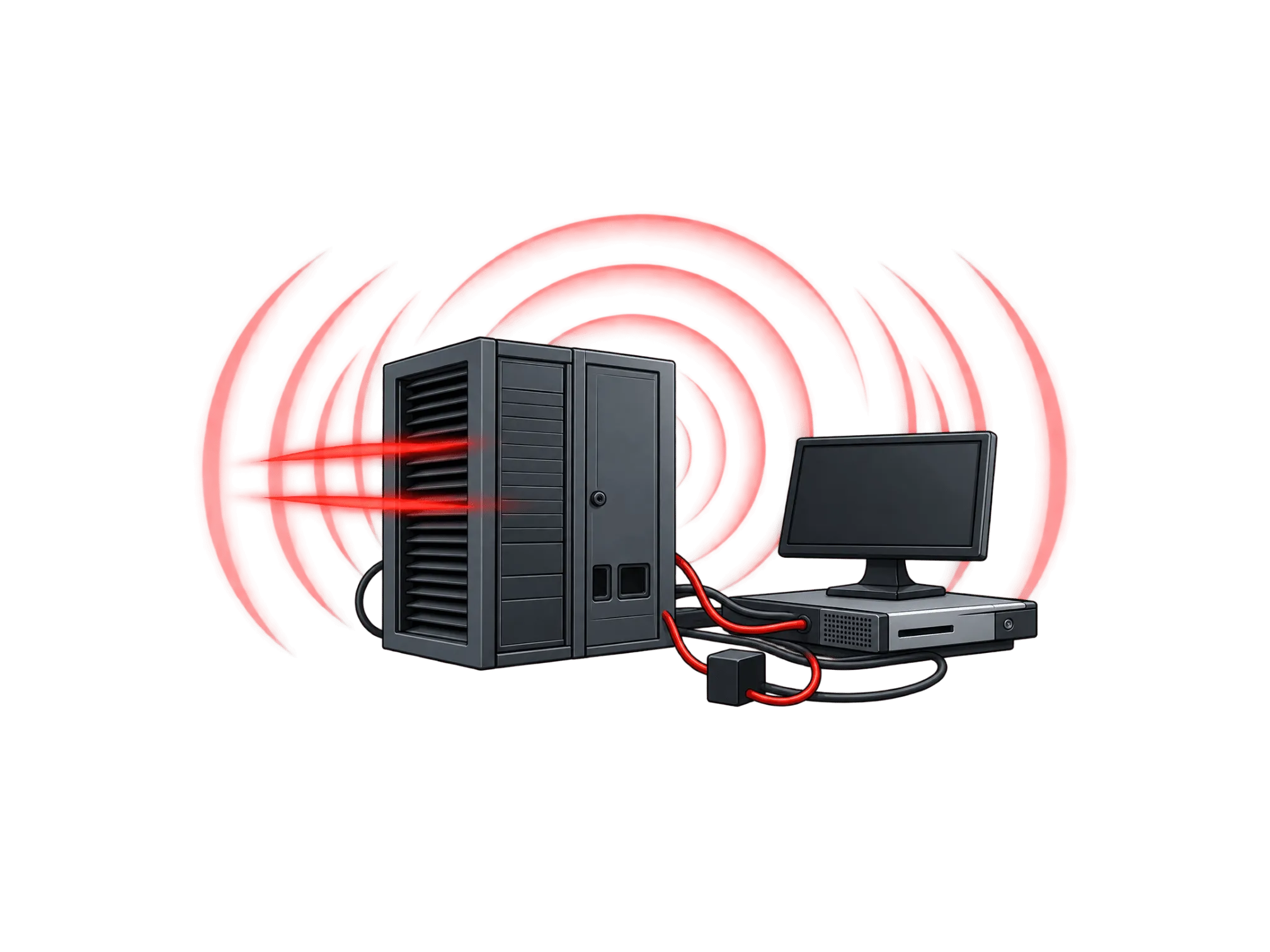
Electromagnetic Leakage
Electronic equipment, displays, cables, and interfaces can generate unintended radiated or conducted signals.
This is where shielding, filtering, protected penetrations, bonding, grounding, and verification become relevant.
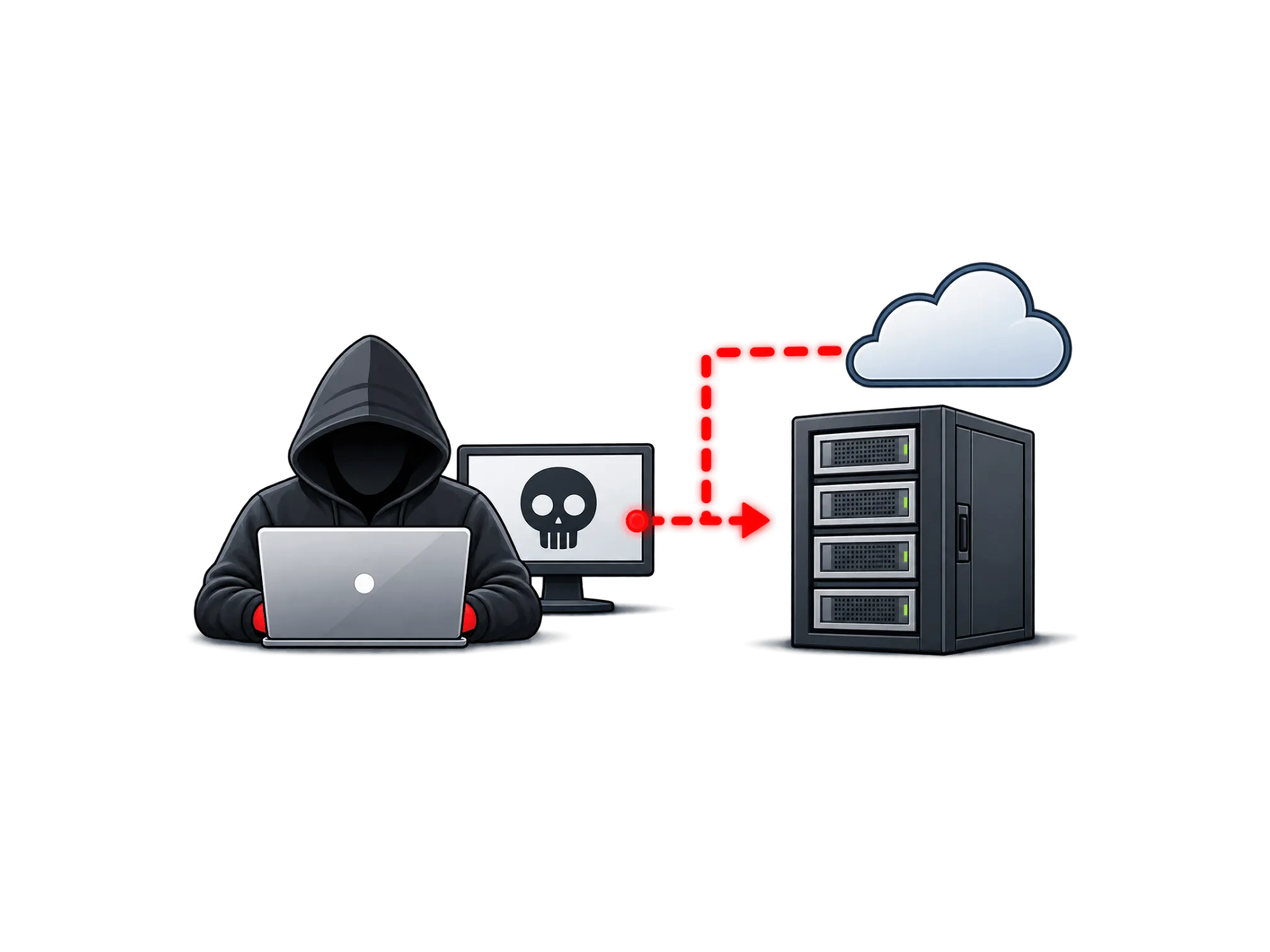
Cyber Intrusion
Information can also be accessed through compromised software, networks, malware, or credentials and is normally addressed through cybersecurity controls.
How Compromising Emanations Can Leave a Controlled Area
The shielding concept should consider both radiated emissions through the enclosure and conducted signals traveling along electrical, signal, or communication connections.
Electronic Equipment
Computers, displays, communication systems, and other electronics can generate unintended signals during normal operation.
Radiated Emissions
Signals can propagate through walls, doors, windows, ventilation openings, joints, and other discontinuities.
Conducted Emissions
Power, signal, and data connections can provide a conductive route across the protected electromagnetic boundary.
Detection Risk
Unintended signals may become a security concern when they can be intercepted and analyzed outside the controlled area.
Choose the Right Shielding Approach
Protection can be applied around the complete environment, around individual equipment, or specifically around conductive interfaces crossing the shielding boundary.
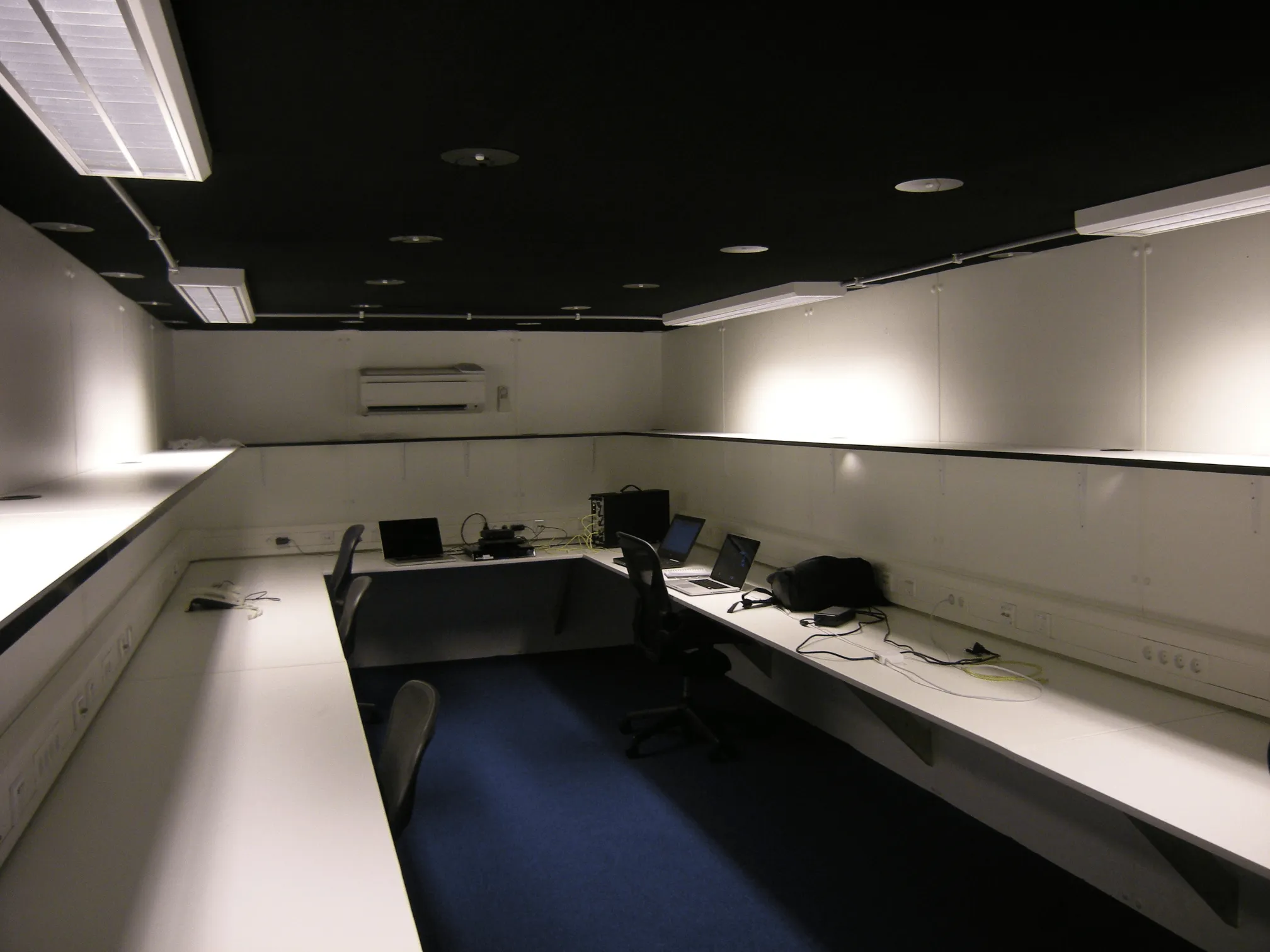
TEMPEST Shielded Rooms
Modular, prefabricated, and project-specific conductive constructions for secure offices, communication rooms, technical areas, and controlled working environments.
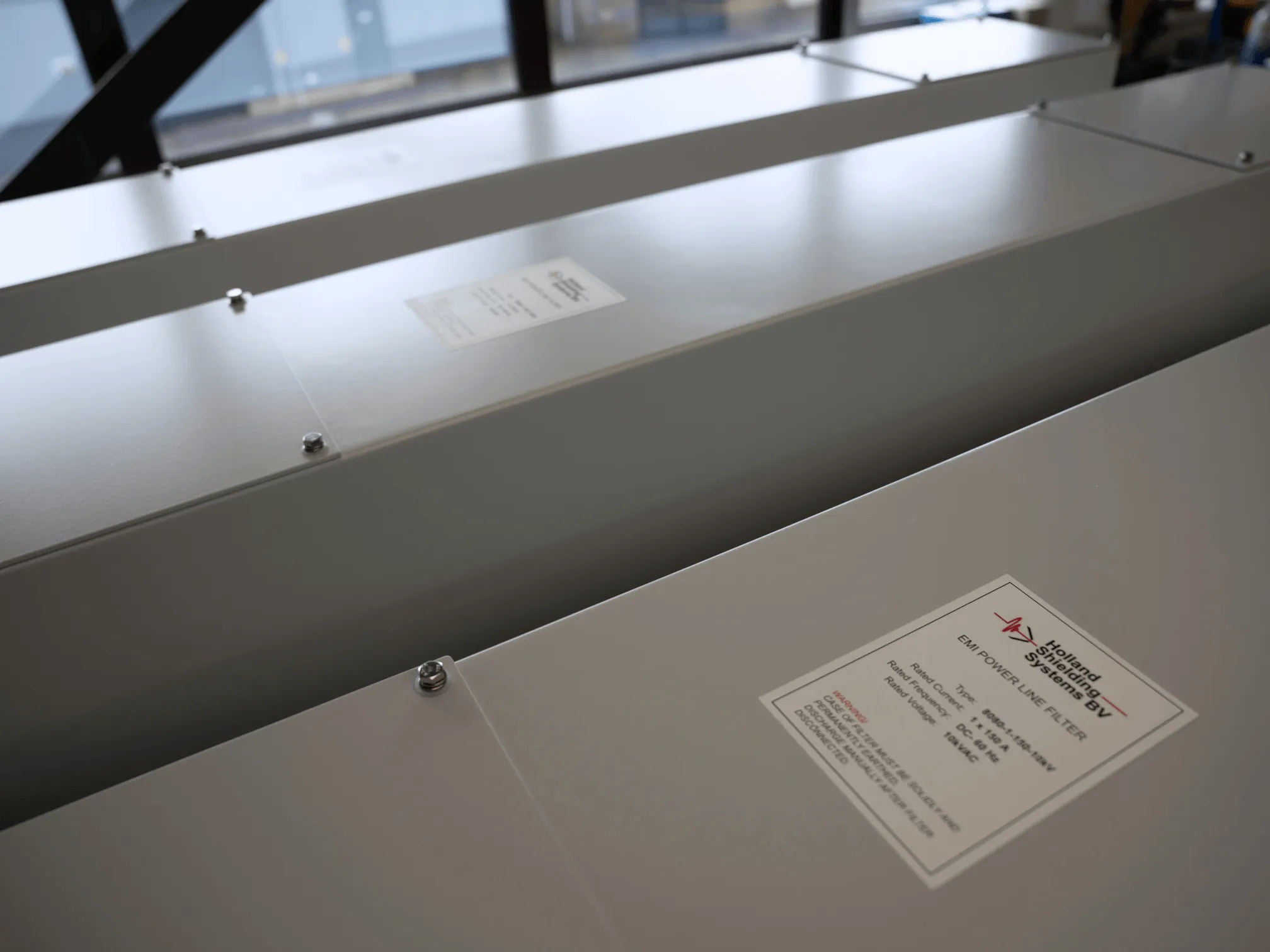
Power, Signal and Data Filtering
EMI filters and protected penetrations help reduce unwanted electromagnetic signals traveling through power and communication connections.
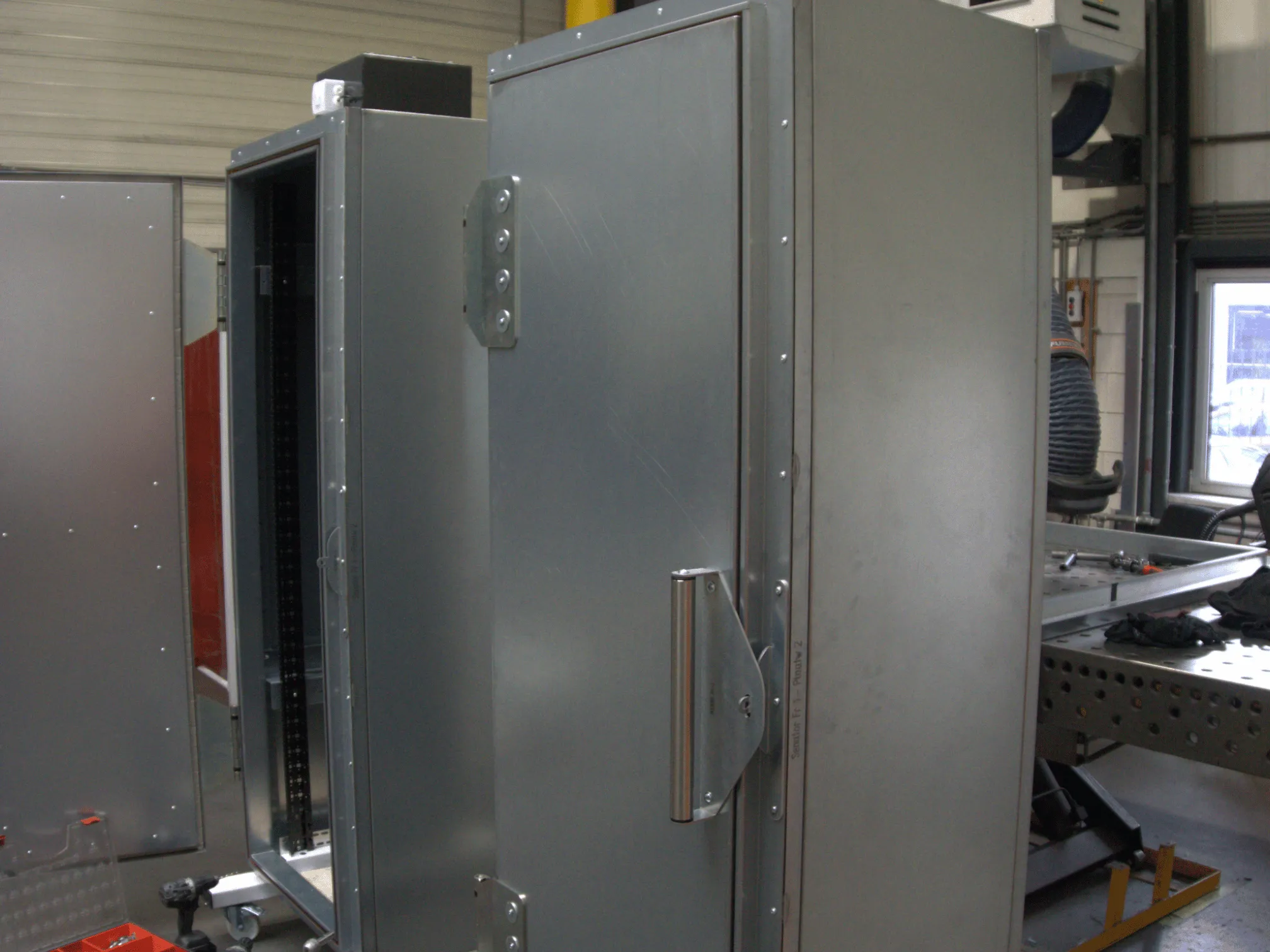
Shielded Racks and Enclosures
Local electromagnetic shielding for servers, communication equipment, displays, and other electronics when room-level shielding is not required.
TEMPEST Standards and Security Requirements
The applicable security authority and project documentation should determine the required equipment level, zoning procedure, installation requirements, measurement method, and acceptance criteria. Read more about eavesdropping and electromagnetic information leakage standards.
NATO SDIP-27 - Equipment Security
SDIP-27 defines NATO TEMPEST requirements and evaluation procedures for equipment processing classified information.
Level A
Level A represents one of the equipment qualification levels defined under SDIP-27 and is used where stringent control of compromising emanations is required.
Level B
Level B provides a different equipment qualification level and may be applicable where the installation environment provides additional separation or attenuation.
Level C
Level C equipment may be suitable where the installation environment provides sufficient attenuation and the applicable zoning conditions permit its use.
The applicable SDIP-27 level should be determined by the responsible security authority and the requirements of the specific project.
NATO SDIP-28 - Zoning Procedures
SDIP-28 addresses NATO TEMPEST zoning procedures used to evaluate the electromagnetic security environment of a facility.
Facility Zoning
Zoning considers the attenuation available between information-processing equipment and locations where compromising emanations could potentially be intercepted.
Equipment Selection
Zoning information can be considered together with SDIP-27 equipment requirements when selecting suitable equipment and determining whether additional shielding measures are required.
TEMPEST Zoning Illustration
The diagram below is a simplified visual representation. Actual zoning should be established according to the applicable procedure and requirements of the responsible security authority.
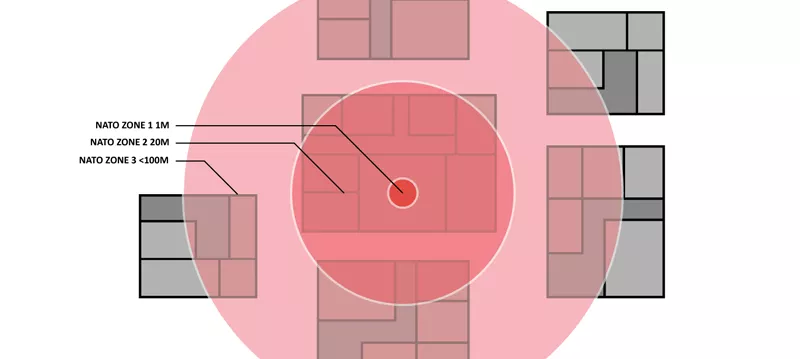
The applicable zoning classification can influence equipment selection, shielding measures, installation controls, and verification requirements.
NATO SDIP-29 - Installation Requirements
SDIP-29 addresses the selection and installation of equipment used for processing classified information.
Installation Considerations
Cable routing, separation, grounding, bonding, filtering, and the treatment of penetrations can affect the electromagnetic security performance of the complete installation.
System-Level Protection
Equipment characteristics, installation conditions, facility zoning, and project requirements should be considered together as part of the overall TEMPEST concept.
Project-Specific and National Requirements
TEMPEST and EMSEC projects may also be subject to national, governmental, defense, organization-specific, or project-specific security requirements.
Project Requirements
The responsible security authority should define the required equipment level, zoning requirements, installation conditions, measurement method, and acceptance criteria.
Holland Shielding Systems
Holland Shielding Systems can use these defined requirements as input for shielding engineering, manufacturing, installation, and agreed verification measurements.
Verify the Complete Shielding Installation
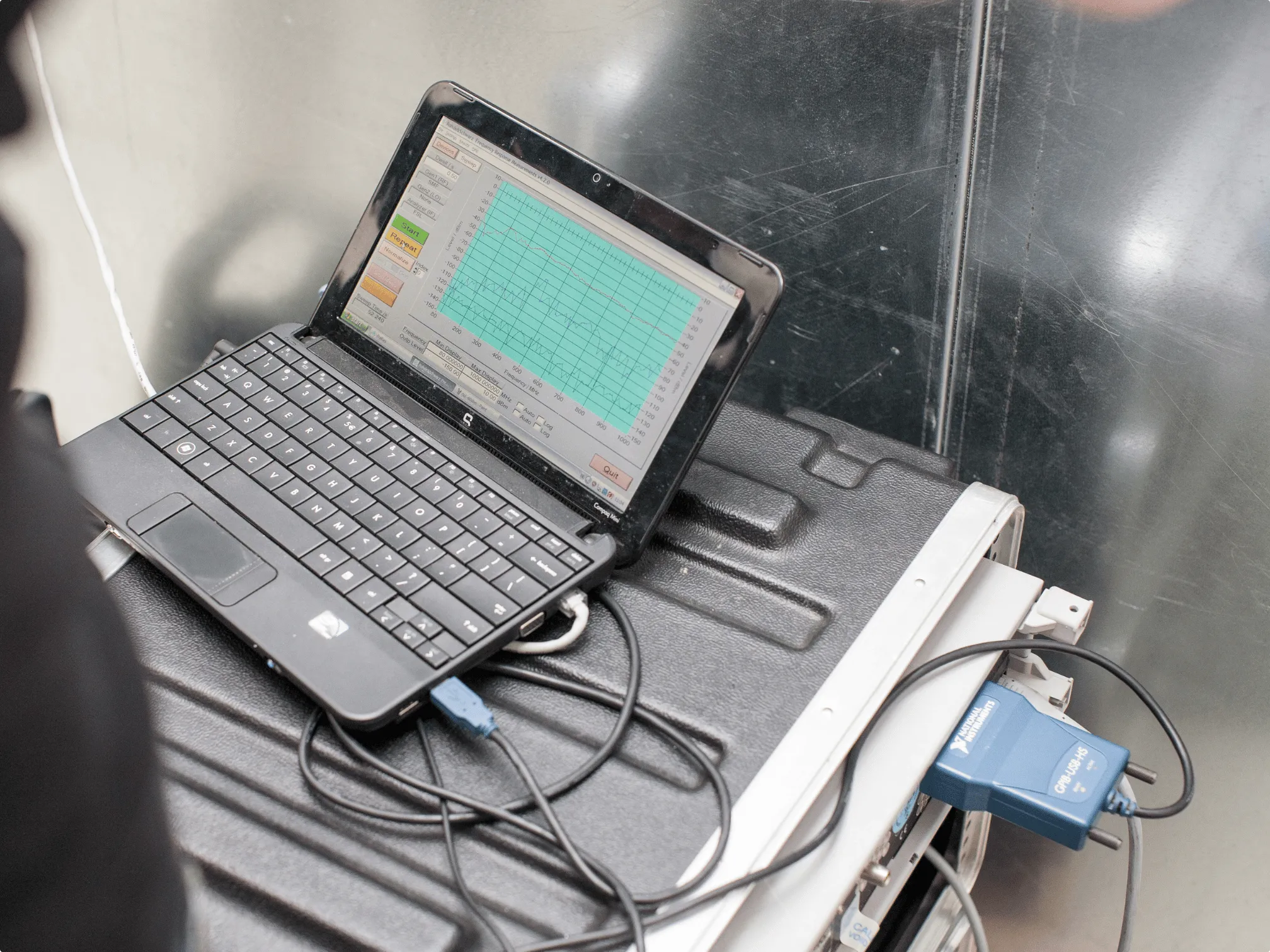
Shielding performance depends on the complete installation. Verification can help identify electromagnetic leakage points and determine whether the installed shielding meets the agreed project requirements.
Complete System Verification
A strong wall construction cannot compensate for an untreated penetration, poorly connected joint, unsuitable filter, or incorrectly integrated door. Doors, windows, ventilation, filters, joints, cable penetrations, grounding, and bonding should therefore be considered as part of the complete shielding system.
Where required, Holland Shielding Systems can perform agreed shielding effectiveness measurements and use defined TEMPEST, EMSEC, SDIP-27, SDIP-28, and SDIP-29 requirements as input for engineering and verification.
- Shielding effectiveness measurements
- Inspection of critical shielding interfaces
- Leakage-point investigation
- Project-specific measurement reports
- Support during corrective modifications
The measurement method, frequency range, test configuration, and acceptance criteria should be agreed before testing.
Where TEMPEST and EMSEC Shielding Is Used
TEMPEST and EMSEC shielding can be relevant wherever sensitive information is processed and unintended electromagnetic emissions need to be controlled. The required approach depends on the equipment, controlled area, technical interfaces, and applicable security requirements.

Defense and Government
Shielded environments for classified information processing, command facilities, secure communication, intelligence systems, and protected government spaces.

Aerospace and Space
Electromagnetic shielding for sensitive communication, control, processing, and ground-support systems used in specialized aerospace and space projects.

Naval and Maritime
Shielding solutions for communication and information-processing systems on vessels, naval installations, and other security-sensitive maritime environments.

Critical Infrastructure
Controlled electromagnetic environments for data centers, telecom facilities, utilities, control rooms, and other security-sensitive technical infrastructure.
Your Application May Be Different
The applications above are only four examples. TEMPEST and EMSEC shielding can be applied to many other systems, facilities, equipment configurations, and security-sensitive environments.
TEMPEST & EMSEC FAQ
What Is the Difference Between TEMPEST and EMSEC?
EMSEC means emission security and concerns measures intended to reduce information-security risks associated with compromising emanations. TEMPEST is commonly used for the investigation, control, and testing of unintended emanations from information-processing equipment and systems.
Does TEMPEST Protection Always Require a Complete Shielded Room?
No. Depending on the defined requirements, protection can involve a complete shielded room, local equipment enclosure, filtered connections, protected penetrations, or a combination of shielding measures.
Can an Existing Room Be Converted Into a TEMPEST Shielded Environment?
Existing rooms can often be retrofitted with electromagnetic shielding. The practical solution depends on the construction, required shielding performance, doors, windows, ventilation, power, data connections, grounding, and available installation space.
Can Power, Signal and Data Connections Enter a TEMPEST Shielded Room?
Yes. Connections crossing the shielding boundary can be integrated using suitable EMI filters, protected cable penetrations, waveguides, bonding, grounding, and other project-specific measures.
Can Holland Shielding Systems Measure the Completed Installation?
Where required, Holland Shielding Systems can perform agreed shielding effectiveness measurements to evaluate the completed electromagnetic enclosure, inspect critical interfaces, and help identify electromagnetic leakage points.
Can Holland Shielding Systems Provide TEMPEST Certification?
Holland Shielding Systems can provide shielding engineering, manufacturing, installation, testing, and agreed verification measurements. Formal TEMPEST certification or approval, where required, is determined by the applicable authority and designated certification process.
Discuss Your TEMPEST Shielding Requirements
Every secure environment is different. Tell us about the application, controlled area, available space, technical interfaces, required shielding performance, and applicable project requirements.
Useful Project Information
- Room dimensions or drawings
- Required frequency range
- Required shielding attenuation
- Doors, windows, and ventilation
- Power and signal connections
- Data and communication interfaces
- Applicable standard or requirement
- Required verification method

Worldwide leading manufacturer of EMC (electromagnetic compatibility), EMI (electromagnetic interference) and RFI (radio frequency interference) shielding solutions. Our EMC/EMI specialists will work together with you from the design phase through final production.
Useful links
Contact
3316 BP Dordrecht
The Netherlands
VAT: NL008884912B01
Tel: +31(0)78 - 204 90 00
Contact us
Opening hours: Monday until Friday - 8:30am-5:00pm CEST