- Contact us
- |
- About us
- |
- |
-
- Dashboard
- Personal information
- Organization
- Address book
- Sign in
- Don't have an account? Sign-up
Shielding low-frequency magnetic fields
MuFerro low-frequency magnetic shielding
Magnetic field reduction for technical, medical and industrial environments
MuFerro shielding is designed to reduce low-frequency magnetic fields around transformer rooms, busbars, high-current installations, laboratories, medical equipment and other sensitive environments.
Holland Shielding Systems B.V. supports the complete process: magnetic field measurement, shielding advice, engineering, in-house production, installation and verification after installation.
- Suitable for DC to 100 kHz applications
- Optimized for 50/60 Hz magnetic fields
- Available as material, construction or complete project
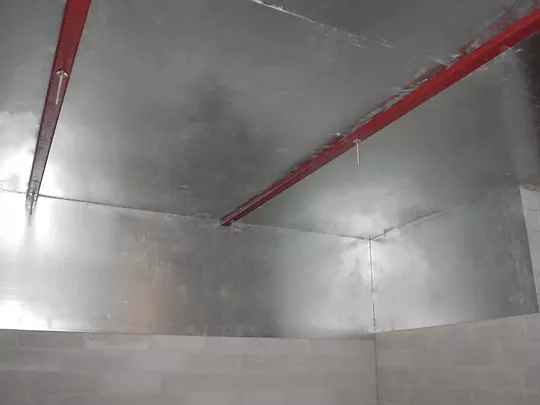
Custom MuFerro magnetic shielding installed above a transformer room.
Where MuFerro shielding is used
Low-frequency magnetic fields can occur around transformers, cables, busbars and other high-current systems. MuFerro shielding helps reduce these fields in areas where people, measuring equipment or sensitive systems are nearby.
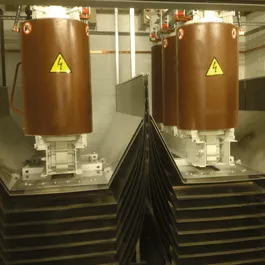
Transformer rooms
Magnetic shielding around transformers, substations and electrical rooms.
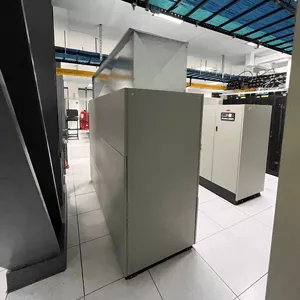
High-current systems
Field reduction around busbars, high-current cables and power distribution systems.

Medical facilities
Magnetic shielding for medical rooms and sensitive diagnostic equipment.

Scientific laboratories
Shielding for laboratories, measuring rooms and technical research environments.
Why use magnetic shielding?
Low-frequency magnetic fields can interfere with monitors, measuring equipment, medical systems and other sensitive electronics. They can also extend into offices, laboratories or public areas located near electrical installations.
The required field reduction depends on the application, customer specification, measurement method, source, frequency and distance. Each project is assessed separately.
What Holland Shielding Systems provides
- Magnetic field measurement before shielding
- Identification of the probable field source
- Advice on shielding concept and layer build-up
- Engineering based on the room and installation
- In-house production of MuFerro components
- Installation support and verification measurement
Customer story: office above a transformer room
A customer wanted to convert a storage room into an office. The room was located directly above several power transformers. Magnetic field interference caused computer displays in the room to flicker.
Problem
An on-site survey measured a magnetic field strength of approximately 750 nT inside the intended office.
Solution
Our engineers designed a custom MuFerro umbrella construction above the transformers. The existing electrical installation did not need to be relocated.
Measured result
After installation, the measured magnetic field strength was reduced from approximately 750 nT to approximately 80 nT.
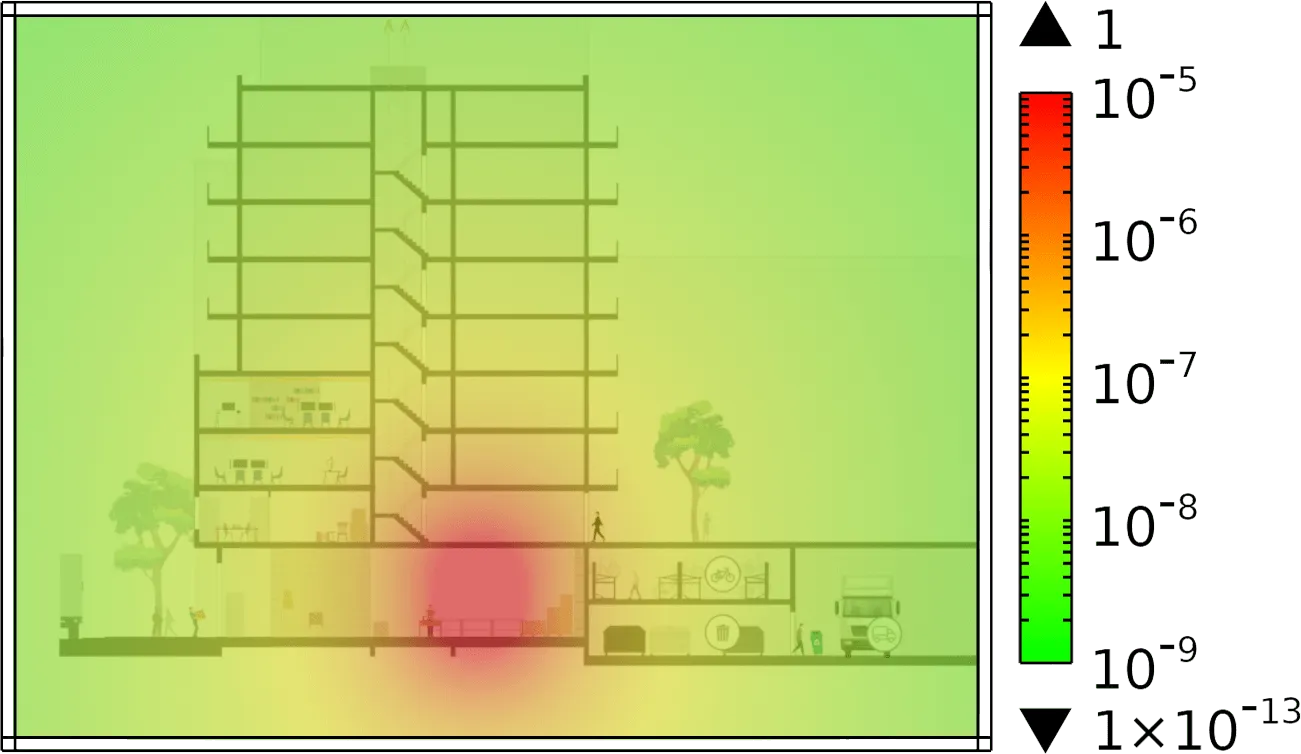
Before shielding
Measured magnetic field strength of approximately 750 nT.
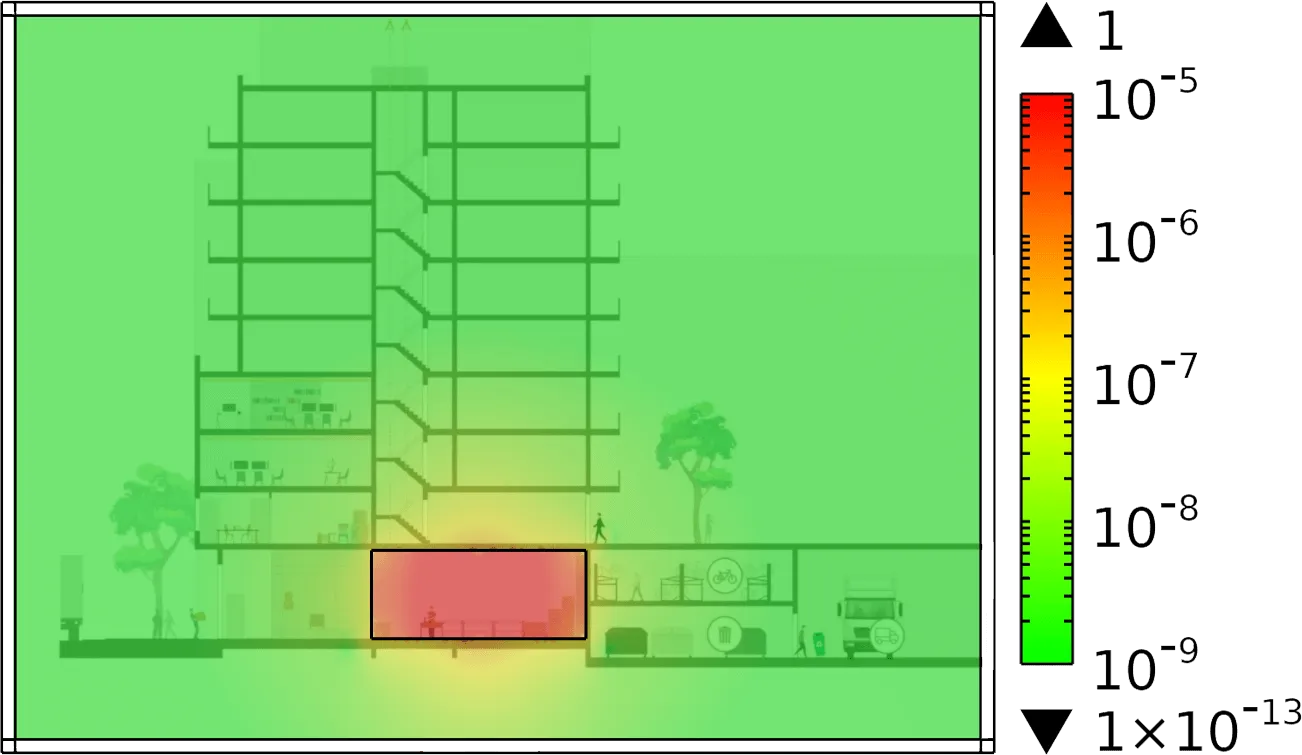
After shielding
Measured magnetic field strength reduced to approximately 80 nT.
MuFerro magnetic shielding material
MuFerro is suitable for magnetic shielding in the frequency range from DC to 100 kHz and is optimized for 50/60 Hz applications.
- Standard sheet size: 2000 x 1000 mm
- Can be applied in multiple layers
- Suitable for walls, floors, ceilings and local enclosures
- Suitable for new and existing installations
- Can be incorporated into project-specific constructions
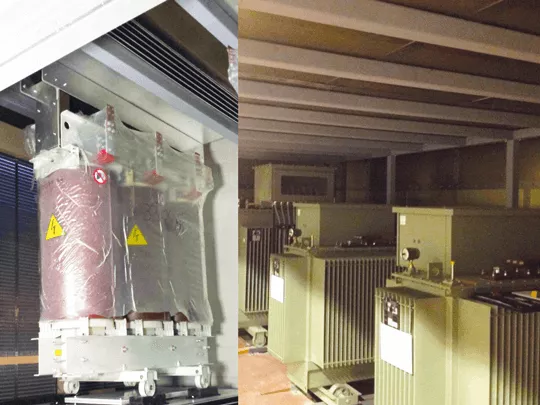
Project-specific shielding construction for a demanding transformer application.
MuFerro shielding types
The final material selection depends on the field source, frequency, magnetic flux density, required reduction and construction.
| Property | Unit | MF-FS | MF-ECFC |
|---|---|---|---|
| Density | g/cm3 | 8 | 4 |
| Thickness | mm | 0.7 | 4.7 |
| Resistivity | Ohm·m | 5E-7 | 3E-7 |
| Curie temperature | °C | 400 | 400 |
| Maximum μr at DC | - | 3800 | 3800 |
| Maximum μr at 50 Hz | - | 3750 | 3750 |
| Maximum μr at 60 Hz | - | 3700 | 3700 |
| Minimum yield strength | N/mm2 | 300 | 105 |
| Minimum tensile strength | N/mm2 | 400 | 85 |
| Hardness | N/mm2 | 150 | 30 |
MuFerro MF-FS
MF-FS combines magnetic permeability with suitable saturation characteristics. It is designed for reducing low-frequency magnetic fields and can be applied in multiple layers.
MuFerro MF-ECFC
MF-ECFC combines magnetic properties with additional eddy-current performance. It can be spot-welded on location to create a more continuous shielding surface.
Project-specific design
The shielding concept depends on the source, field strength, distance, room layout, required reduction and available installation space.
MuFerro DC performance
The graph shows the relative permeability of MuFerro under DC magnetic field conditions.
Please note: These values are measured under laboratory conditions. Results may vary in other situations; please read our Guarantee
MuFerro AC performance at 50/60 Hz
The graph compares the relative permeability of MuFerro at 50 Hz and 60 Hz.
Please note: These values are measured under laboratory conditions. Results may vary in other situations; please read our Guarantee
Shielding characteristics
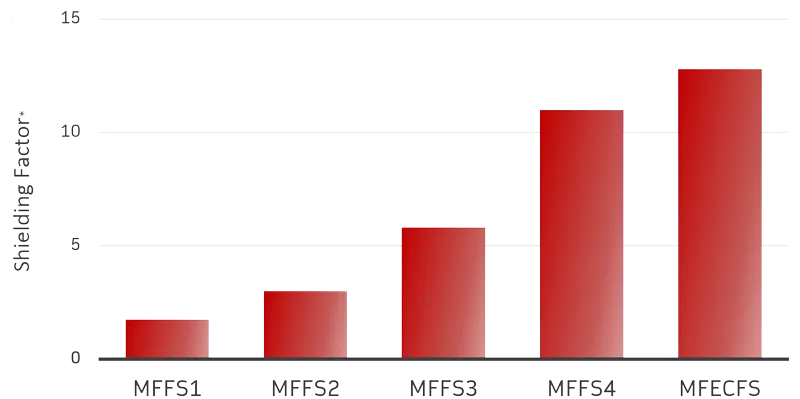
Magnetic shielding performance can be expressed as a shielding factor. The final reduction depends on the magnetic field strength, frequency, material type, number of layers, construction geometry and installation quality.
MuFerro-FS can be installed in multiple layers. MuFerro-ECFC can be spot-welded to create a more continuous shielding surface.
Magnetic shielding reduces magnetic field strength. It does not completely block the magnetic field.
Retrofit installation
MuFerro shielding can often be installed after transformers, busbars or other electrical equipment have already been placed.
Depending on the magnetic field distribution, the shielding can be installed on a wall, ceiling, floor or directly around the source.
Finishing after installation
The shielding can remain visible in a technical room or be covered as part of the final wall, floor or ceiling construction.
The final finish depends on the project requirements and the intended use of the room.
MuFerro magnetic shielding installed above a transformer room.
Heavy MuFerro shielding construction for transformer equipment.
Magnetic field verification
The magnetic field is measured before the shielding concept is finalized. After installation, a follow-up measurement can verify the achieved field reduction.
The measurement method, positions and operating conditions should be recorded so the before-and-after results can be compared correctly.
A measurement report can be supplied when required for the project.

Typical MuFerro project process
1. Measure
We identify the magnetic field source, field strength, frequency and affected area.
2. Engineer
Our engineers define the shielding surface, material type and required layer build-up.
3. Produce and install
Shielding components are produced in-house and prepared for installation.
4. Verify
The final magnetic field reduction can be checked with a follow-up measurement.
Information required for a quotation
Please provide as much of the following information as possible. When some details are unavailable, our specialists can help determine what is required.
Drawings and dimensions
- Cross-sectional sketch or technical drawing
- Dimensions of the magnetic field source
- Dimensions of the protected area
- Available installation space
Position and distance
- Horizontal distance from the source
- Vertical distance from the source
- Position above, below or next to the source
- Location of sensitive equipment or occupied areas
Technical data
- Current in amperes
- Transformer capacity in kVA
- Transformer, cable or busbar type
- Operating frequency
- Available magnetic field measurements
Need low-frequency magnetic shielding?
Send us your drawing, technical data, measurement results or project description. Our engineers can help determine whether MuFerro shielding is suitable for your application.
We can assist with magnetic field measurement, engineering, material selection, production, installation and verification.

Worldwide leading manufacturer of EMC (electromagnetic compatibility), EMI (electromagnetic interference) and RFI (radio frequency interference) shielding solutions. Our EMC/EMI specialists will work together with you from the design phase through final production.
Useful links
Contact
3316 BP Dordrecht
The Netherlands
VAT: NL008884912B01
Tel: +31(0)78 - 204 90 00
Contact us
Opening hours: Monday until Friday - 8:30am-5:00pm CEST